Why We Backed Rivo
Self-driving finance
Aditya Agarwal · August 4, 2026
There are more than five trillion dollars sitting in American checking accounts earning nothing. The banks holding it earn plenty, and the gap between those two numbers is one of the largest wealth transfers in the economy.
Almost nobody acts on this, because acting on it means watching your balance, predicting your own bills, and shuttling money between accounts every few days. Banks call that customer behavior inertia, when it's closer to a tax.
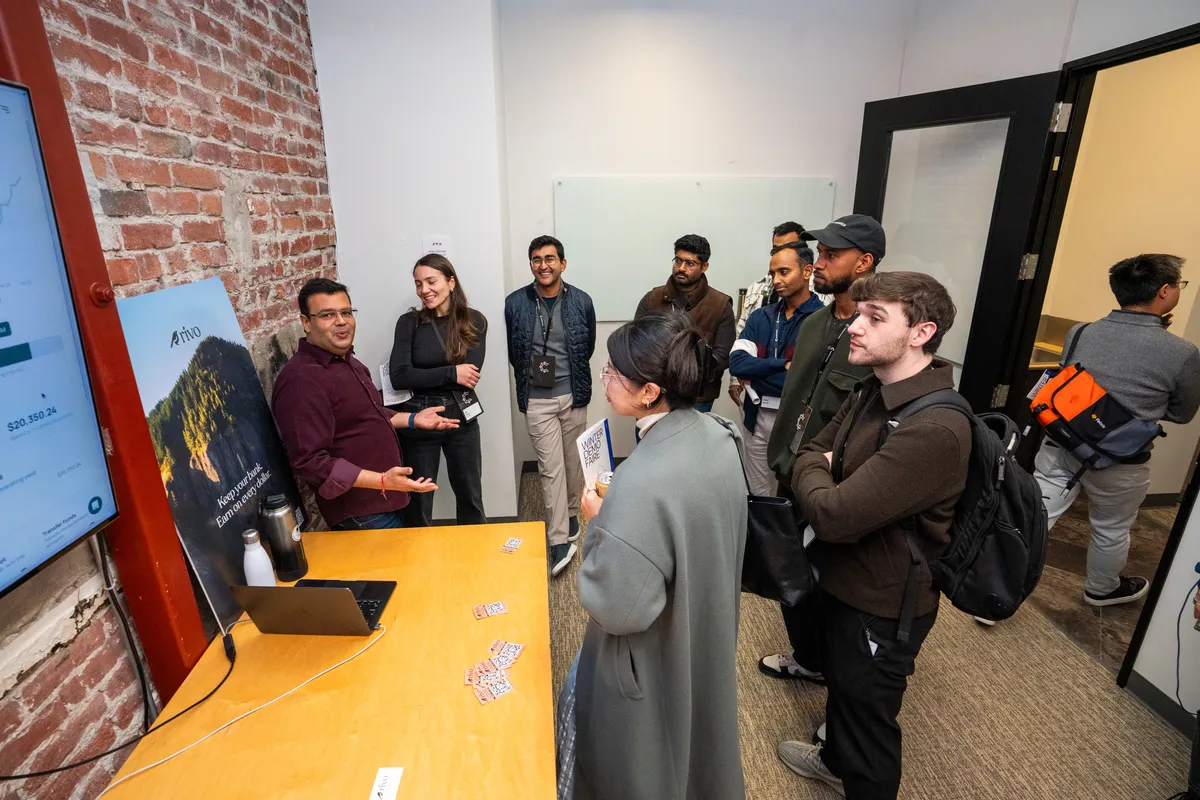
Rivo makes this whole problem disappear. Ambrish Tyagi is building self-driving money: agents that connect to the checking account you already have, learn your cash flow, sweep idle dollars into Treasury-backed yield, and bring them back before your bills hit. Every dollar earns until the moment you spend it.
This isn't just another savings account. The core is prediction under asymmetric cost. Forecasting a household's cash flow means modeling paychecks, rent, the quarterly tax payment, the surprise car repair, and the cost of being wrong is not symmetric: money returned a day early costs you a little yield, money returned a day late bounces a bill and destroys trust permanently. This problem demands full autonomy rather than dashboards that suggest, because the entire value is that nobody is watching. And it has the property I love most in an AI business: every sweep resolves against reality within days, so every prediction becomes a labeled example and the system compounds with use.
Ambrish is one of the few people who has shipped this class of system where lives, not bills, were the cost of error. He has a PhD in AI and more than seven thousand citations, he built and launched consumer AI products at Amazon working with Jeff Bezos's staff, and he led the L4 autonomy work at Cruise that put purpose-built robotaxis on the road in San Francisco and Austin. Banks will not build this product, because it dismantles the deposit spread they live on. Fintech apps have not built it, because they are dashboards that report rather than act. The overlap of people who can build L4-grade autonomy and understand consumer finance is very small, and Ambrish sits in it.
Ambrish came into South Park Commons as a Founder Fellow during the Fall of 2025, where we wrote the first check. On a few hundred thousand dollars he recruited an ML engineer from Cruise, an engineer from Tesla Autopilot, and a compliance lead from Capital One and JPMorgan, brought on Vince Maniago, who was an early PM on Mint and CPO of Personal Capital, to lead product, and negotiated his way into a production banking partnership that most seed-stage companies wait years for. Then the product went live with real money. When the seed came together, we doubled down and wrote the largest check in the round.
The same agents that learn when your bills hit can refinance your debt when rates move, negotiate what you are overpaying for, and put the machinery of a family office under every household in the country.
Rivo is live at rivofi.com, and they are hiring engineers who want to build autonomous systems where the edge cases actually matter. Reach them at [email protected].
Self-driving cars took two decades because the last edge cases were the hard ones. Self-driving money is the same problem with a friendlier failure mode, and the person building it has already solved the harder version once.