Investing in a Longshot
The sky is not the limit.
Aditya Agarwal · June 23, 2026
Somewhere in a remote part of the world in the not-too-distant future, there is a big red button. When you press this button, discs of compressed air explode in rapid sequence down the length of a 3m wide, 15km long barrel, accelerating a purpose-made vehicle to 8.5 km/sec. This projectile exits the barrel at hypersonic speed, careens upward due to the laws of physics, and punches its way through the atmosphere into orbital space.
It’s a giant space gun. Cannon. Kinetic launch system.
Whatever you call it, what Longshot Space is building will bring down the cost of getting anything that fits (not people, sorry) into orbit by several orders of magnitude compared to chemical rockets. And as SpaceX showed, when the economics of launch get cheaper, demand skyrockets.
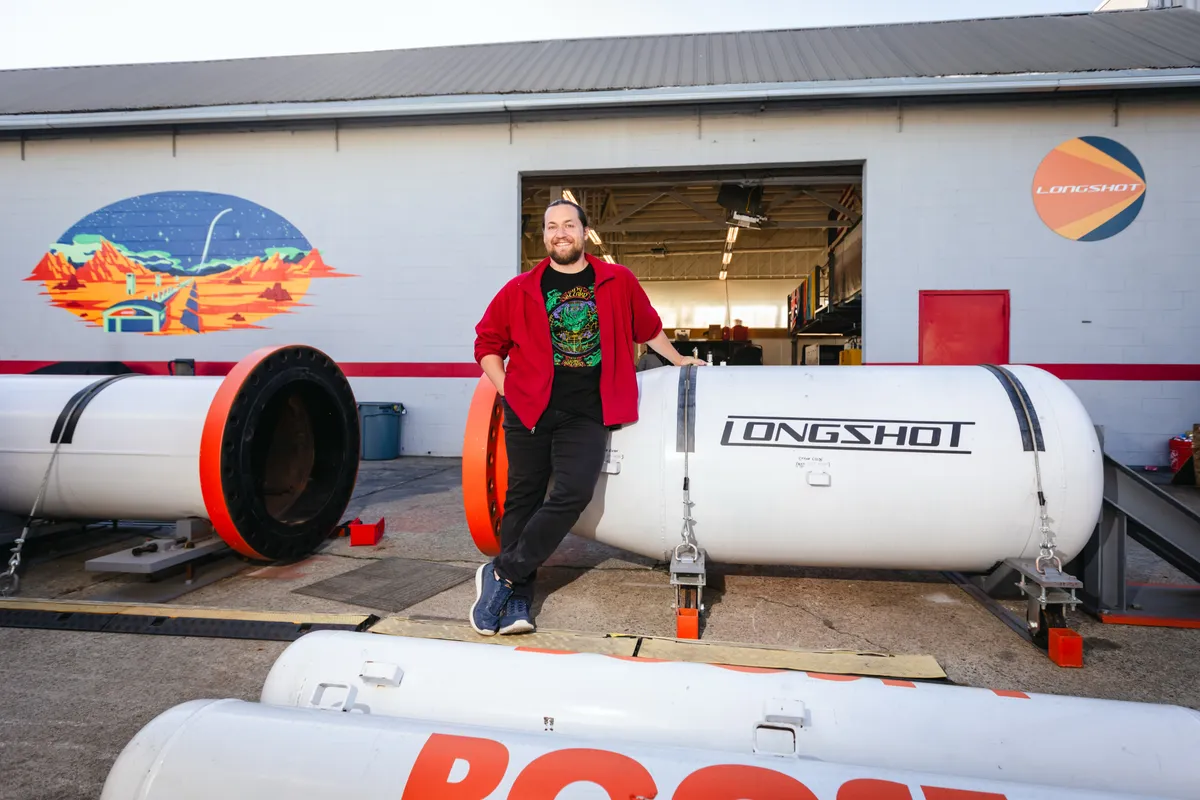
Growing demand leaves launch as the main bottleneck. Longshot Space is solving it. We met CTO Nato Saichek through our Minus One speaker series and CEO Mike Grace during a visit to their prototype in Oakland. We were so impressed with the founders and excited by their mission, we decided to join it. We’re very proud to announce SPC's $5 million investment in Longshot Space.

Building a giant pneumatic cannon to shoot satellites into orbit isn’t a new idea. In the 1960s, Gerald Bull's HARP program used the same concept to reach near-orbital altitudes. A successor program, SHARP, proved the concept again in the ‘80s. The idea was never wrong, but it was early. There’s a world of difference between near-orbit and controllably reaching true orbit, and there was no commercial space market to cover the gap.
But military spending prepared the way for chemical rockets which prepared the way for SpaceX which prepared the way for the modern commercial space industry. Now there’s more demand for space launch than there is launch capacity. Queue the space gun.
More importantly, queue Mike and Nato. It’s rare for any team to have a world class storyteller, much less the two heading Longshot. Building something that makes people say, “that’s crazy” requires the vision, expertise, and magnetism to convince enough skeptics to think, “but maybe…” Mike has the rare ability to make impossible ideas sound inevitable. Nato talked himself out of a rocket engineering job and into the project by proving it possible in a simulation.
Let’s get technical for a bit, because it worked on Nato and it worked on us. It’s easy for the simplicity of kinetic launch to obscure the challenge. Going from the near-orbital velocities of HARP and SHARP to true orbital velocity, under control, is hugely ambitious. A single-stage gas-injection system tops out around 2.5 kilometers per second. Launching from the ground means you need to clear closer to 8.5 kilometers per second at the muzzle once you account for drag and altitude. Longshot's breakthrough is a technique called side injection. Instead of pushing the projectile from behind, you fire gas in from the sides against a tapered tail, so the surface the gas hits is moving at only a fraction of the projectile's true speed. That trick—and the precise timing that enables it—multiplies the achievable velocity to the levels needed to make orbit reachable.
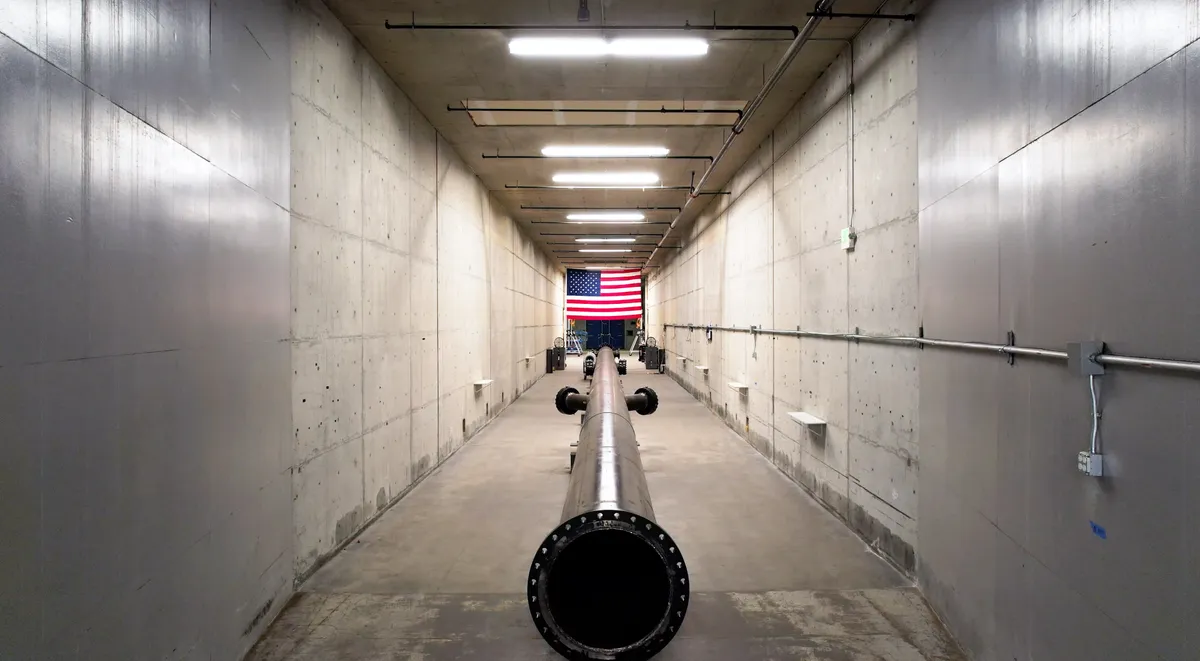
The Longshot team has proven their kinetic approach in principle. Now it’s time to scale. There’s a long road between the 60 foot prototype cannon in Oakland and the 15km space gun. And there’s significant value in intermediate systems that can reliably get large payloads to hypersonic speed. But ultimately the goal is the final frontier. This team has the right stuff to get there. We’re thrilled to join the mission.
Let’s shoot things into space.